Wedding day timeline: your schedule from morning to night
Contents5 sections
Venue, outfits, guest list: amid all the big decisions of wedding planning, one element is often underestimated, yet it is crucial to how your day goes — the wedding day timeline. It is the common thread, the invisible script that turns many separate moments into one harmonious, unforgettable whole. A well-thought-out schedule is the key to avoiding stress and enjoying every moment to the full.
So how do you plan it? Which items should not be missed, and how much time should you allow for each? This guide takes you step by step through your own wedding day timeline, from getting ready in the morning to the last dance, with a detailed sample schedule, tips and answers to the most common questions.

Why a detailed timeline matters
You might be wondering: do we really have to schedule everything so precisely? We want a relaxed day! That is understandable. But a good plan is not there to restrict you — quite the opposite. It gives you freedom.
A well-thought-out timeline pays off for several reasons:
- Less stress: you and your closest helpers (witnesses, family) know exactly what happens next. That prevents rushing and uncertainty on the day itself.
- Everyone is informed: your vendors, from the photographer and the caterer to the DJ, rely on a shared schedule to coordinate their work. A professional timeline is the basis of everything they do.
- Guests know what to expect: your guests feel more at ease when they know what is coming. A rough schedule with the invitation or a sign at the venue helps them find their way and builds anticipation.
- Nothing gets forgotten: in the bustle of the day, moments such as cutting the cake or throwing the bouquet can get lost. A plan makes sure all the highlights you want actually happen.
A good plan is your personal wedding planner on paper: it has your back, so you can concentrate on what matters — celebrating your love.
A sample wedding day timeline in seven phases
Every wedding is unique, but there are tried-and-tested phases that make a good framework for your own timeline. Use this detailed sample schedule, built around a ceremony at 15:00, as a template and adapt it to your plans.
Phase 1: getting ready (about 4 to 5 hours before the ceremony)
The day does not begin with the ceremony. The hours before it are full of excited anticipation and deserve to be celebrated.
- Around 08:00: a relaxed breakfast. Start the day calmly and consciously. A light breakfast gives you the energy you need. Put your phone aside and enjoy the moment.
- Around 09:00: the make-up artist and hairdresser arrive. The pampering now begins for the bride, and perhaps the bridesmaids. Allow plenty of time: 2.5 to 3 hours is realistic for bridal hair and make-up. Add 45 to 60 minutes for each additional person (the bride's mother or a witness, for example).
- Around 11:00: the photographer arrives. Your photographer should arrive about 60 to 90 minutes before you leave. That leaves enough time to capture the magic of getting ready: the dress on its hanger, the rings, the cufflinks, laughing with your witnesses.
- Around 12:00: getting dressed. This is it! Putting on the wedding dress is an emotional moment that takes time, so allow at least 30 minutes. The groom should now be getting ready with his groomsmen too.
- Around 12:30: a last toast and final details. A glass of champagne with your closest friends, one last look in the mirror. Take a deep breath!
Phase 2: first look and couple shoot (optional, about 2 hours before the ceremony)
The first look is the moment when the couple see each other in full wedding attire for the first time: privately, just the two of them (and the photographer).
- Around 13:00: the first look. This intimate moment is often one of the most emotional of the whole day. It takes the pressure off the entrance at the ceremony and gives you a moment to yourselves before the bustle begins.
- Around 13:15 to 14:15: the couple shoot. Many couples do their portraits straight after the first look, before the ceremony. The advantage: hair and make-up are still flawless, and later you can enjoy the apéro — the drinks reception after the ceremony — with your guests without interruption. Allow at least an hour at a beautiful spot near the ceremony venue.
Phase 3: the ceremony (about 1 to 2 hours)
The heart of your day. Precise timing matters here.
- Around 14:30: guests and groom arrive. Guests should arrive about 30 minutes before the ceremony begins. Background music creates a lovely atmosphere. The groom and his witnesses welcome the guests as they arrive.
- Around 14:50: the bride arrives. The bride (and her driver) should arrive a few minutes before the start and be ready to go.
- Around 15:00: the ceremony begins. The big moment has come: the entrance, the ceremony, the "I do", the kiss.
- Length: a civil ceremony often takes only 20 to 30 minutes; a church or celebrant-led ceremony can take 45 to 75 minutes. Check the exact length in advance. Our guide explains how the civil wedding works, and the federal government's official portal ch.ch (in German) has more information.
- Around 16:00: the recessional and congratulations. Allow plenty of time for congratulations after the ceremony: every guest will want to hug and congratulate you. Reckon on about 30 seconds per guest or couple. With 100 guests, that quickly adds up to 30 to 40 minutes!
Phase 4: apéro and group photos (about 1.5 to 2.5 hours)
The relaxed transition from the formal to the festive part of the day.
- Around 16:30: the apéro begins. While the couple are still receiving the last congratulations, guests can already help themselves to drinks and nibbles.
- Around 17:00: group photos. This is the best time for the official group photos.
- Tip: make a list of the groupings you want in advance ("couple with parents", "couple with witnesses", "all our friends") and give it to your photographer and to a master of ceremonies who rounds people up. It saves an incredible amount of time and nerves.
- During the apéro: use the time to mingle with your guests. There are often a few small extras at this point too, such as a guest book, a photo booth or soft background music.
Phase 5: dinner and speeches (about 3 to 4 hours)
The culinary and often very emotional part of the evening.
- Around 18:30: moving to the dinner venue. Allow enough time for the transfer.
- Around 19:00: entrance and start of dinner. The couple enter the room, often to music, and open the dinner.
- Around 19:30 to 22:00: courses and speeches. A classic three-course menu takes time. The perfect moment for speeches is between courses. Be sure to agree the timing with the kitchen so that the food does not go cold! Limit each speech to about 3 to 5 minutes and fix the order in advance.
Phase 6: first dance and party (from about 22:00)
Let the corks pop!
- Around 22:00: opening the dance floor. The first dance is the official start of the party. Straight afterwards, the DJ or band should take over with a danceable song to get the guests onto the floor.
- Around 22:30: cutting the wedding cake. A classic moment that often comes between the first dance and the party in full swing.
- From 22:45: party! Time for music, dancing and more surprises, such as throwing the bouquet, games (if you want them) or the photo booth.
Phase 7: winding down (open end)
- Around 00:30: the midnight snack. After a few hours of dancing, everyone welcomes a little something to eat, such as currywurst, mini burgers or a cheese platter.
- From 01:00: the party slowly winds down. Say goodbye to your guests personally and give them their wedding favours as a small keepsake.
Tips for planning your timeline
Creating a wedding day timeline is more than writing down times.
- Buffers are worth their weight in gold: this is the most important tip of all. Plan 15 to 30 minutes of buffer between all the items on your schedule. There will always be small delays, and buffers stop your whole schedule from falling apart.
- The timeline for your invitation: your guests do not need a minute-by-minute schedule. Give them the key times: the start of the ceremony, the apéro and dinner, and perhaps "open end". That is plenty.
- Bring all your vendors on board: share your detailed timeline with every vendor. A good photographer or wedding planner can also give you valuable feedback on your schedule.
- Think of yourselves! Deliberately plan two or three short breaks of 10 minutes just for the two of you. Step away, take a breath and take in what a wonderful day it is.

Frequently asked questions
What does a typical wedding day timeline look like?
A typical wedding day falls into phases: getting ready in the morning, followed by the ceremony in the afternoon. Then come the apéro with congratulations and photos, dinner with speeches and finally the party, with the first dance and the cake, late into the night.
When should we draw up our timeline?
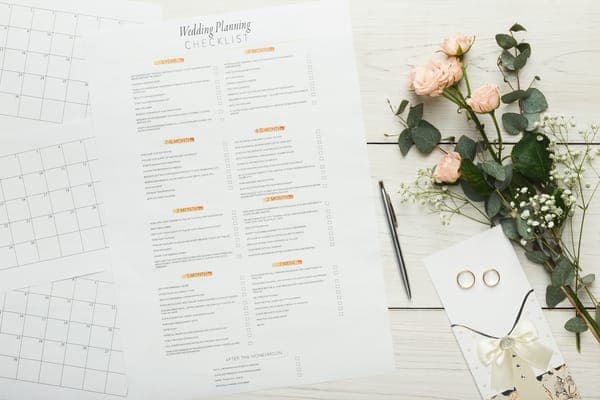
Start the rough plan as soon as your ceremony and venue times are fixed, about 6 to 9 months before the wedding. The detailed planning and coordination with your vendors then follow in the last 2 to 3 months. Our wedding planning checklist shows what else to do when.
Who makes sure the timeline is kept?
Ideally, choose a trusted person (a witness, or a professional master of ceremonies or wedding planner) who keeps an eye on the plan and is the contact for guests and vendors. That way you can enjoy the day without constantly checking the clock.
How detailed does the timeline need to be?
Ideally, make three versions:
- For your guests: a rough overview with the 3 or 4 most important times.
- For yourselves: a detailed plan with every item and all the buffers.
- For your vendors: a very detailed timeline with all the relevant information, contact details and specific instructions.
Your key to a relaxed wedding day
Planning your wedding day timeline may look like a big task at first, but it is one of the most rewarding investments in your big day. A good plan is not a rigid corset but a flexible framework that gives you security, orientation and, above all, the freedom to enjoy every moment. Remember to plan buffers, communicate clearly and hand over responsibility on the day itself. Then your timeline becomes the perfect script for a relaxed and unforgettable start to your life together.